If your reports are confusing, your data needs a translator.
Many companies track dozens of metrics but still struggle to answer simple questions:
• Why are customers calling back?
• Why do KPIs improve while results get worse?
• Where is friction actually happening?
I analyze operational data to reveal what the metrics are really telling you.
Have a dashboard, report, or spreadsheet you’re struggling to interpret?
Meet Gina
I study how operational metrics behave inside real systems.
Behind PixelKraze
I began analyzing why organizations often see metrics improve while customer experience declines. Most organizations track dozens of KPIs, but few know whether those metrics still reflect reality.

Problems I Work On
Many organizations see metrics improve while customer experience declines. I analyze operational systems to detect hidden friction, KPI drift, and repeat-contact patterns that signal deeper problems.
Using real datasets, experiments, and case studies, I investigate why operational metrics drift — then translate those findings into process fixes, measurement improvements, and governance recommendations.
Explore NovaWireless — Trust Signal Health, a case study on KPI drift, or browse the full case study library.
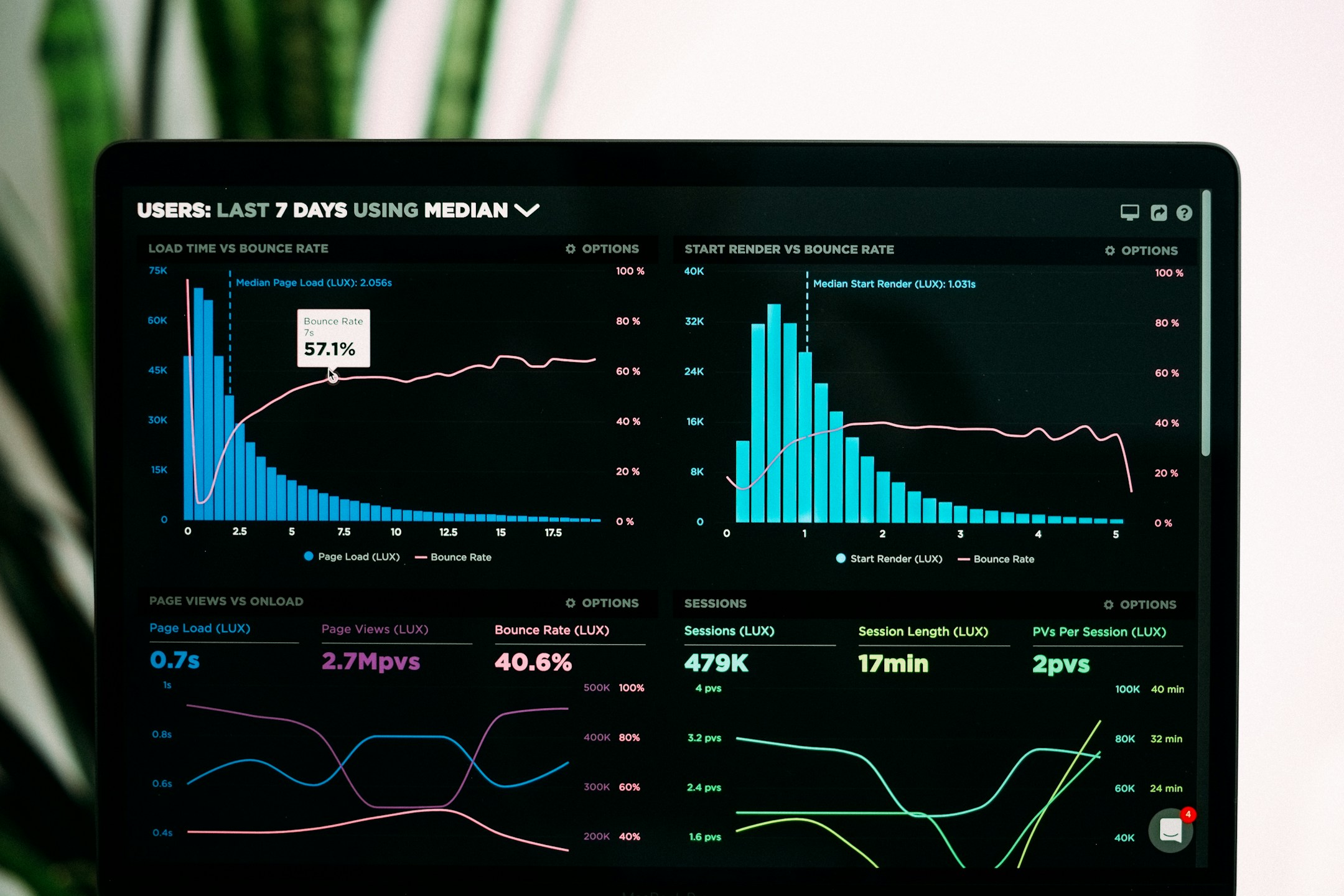
From Spreadsheet to Insights
Real examples of charts and tables I build from spreadsheet/CSV exports—so you can compare KPIs, spot trends, and make decisions faster.
Privacy Note: No sensitive data needed—IDs only are fine.
Integrity Signal Profile: DAR / DRL / DOV / POR / TER
Bar chart showing all five DFDE governance signals normalized to a 0–1 scale. DAR and TER at ceiling, DRL elevated, DOV and POR low — the shape of this chart tells you whether a system problem is structural or behavioral before a single rep is reviewed.
System Integrity Index (SII) Gauge
Horizontal gauge showing SII = 45.1 in the Watch band. The SII is not a performance score — it is a velocity regulator that constrains proxy optimization when durable outcomes are diverging.
Credit Behavior Analysis: Frequency and Average Amount
Dual histogram showing credit rate and average credit amount distributed across 250 agents. The tight clustering with no outliers is the systemic signature — when everyone looks the same, the problem is in the architecture, not the individual.
Repeat Contact Rate by Rep
Area chart of 30-day repeat contact rate ranked across all 250 agents with the department average marked at 0.18. The smooth, gradual slope with no sharp outliers is the fingerprint of systemic drift — if bad actors were driving the signal, you would see spikes. You don't.


Want a second set of eyes on your data?
Tell me what decision you’re trying to make and what data you have. I’ll tell you what’s possible and what I’d recommend as a first step.
No sensitive data needed—IDs only are fine.
© 2026 PixelKraze, LLC
Copyright & Licensing
All original content, models, documentation, and frameworks on this site are the intellectual property of PixelKraze, LLC unless otherwise stated.
This work is licensed under the Creative Commons Attribution-NonCommercial 4.0 International License (CC BY-NC 4.0).
Commercial use, redistribution for profit, or incorporation into proprietary systems requires prior written permission.
Independent work using synthetic or public data. Not affiliated with or endorsed by any employer.